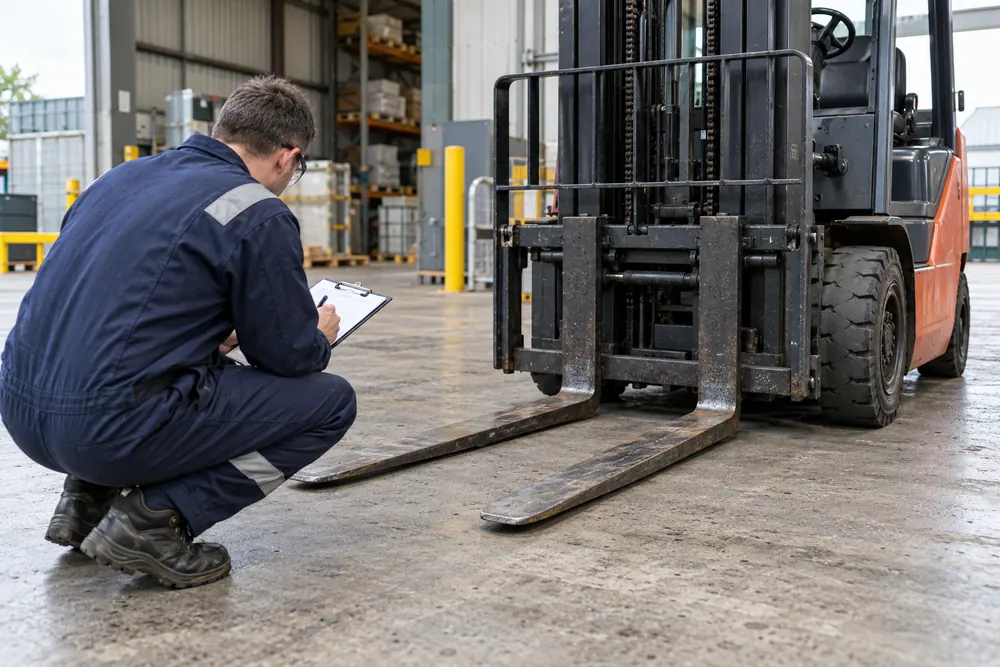
What A Thorough Examination Does
A forklift LOLER inspection is commonly used to describe a thorough examination of the truck's lifting equipment. It is a detailed assessment by a competent person, followed by a written report. Its purpose is to identify safety-related deterioration and defects, rather than simply to carry out routine maintenance tasks.
The lifting parts include the forks, chains, mast mechanism and relevant attachments. Other safety-related parts, including brakes and steering, also need appropriate attention under PUWER. Ask how the proposed examination scope addresses the truck as a whole so a report on lifting components is not mistaken for evidence about everything else.
When Examination Is Required
LOLER provides for periodic thorough examination and examination in specified circumstances. For goods-only lifting equipment, the usual interval is at least every twelve months, or as set out in an examination scheme drawn up by a competent person. Equipment lifting people and lifting accessories normally have shorter intervals (HSE, thorough examination guidance).
The correct schedule depends on the machine, configuration, use and any written scheme. Exceptional circumstances, damage or work affecting lifting parts can also trigger a need for examination before further use. Share the previous report and any changes with the competent person rather than calculating the next date from a generic reminder alone.
Competence And Independence
The competent person needs suitable knowledge and experience of the equipment to recognise defects and judge their significance. HSE guidance says examination should be sufficiently independent and impartial. If maintenance and examination are arranged through the same organisation, clarify how those responsibilities are separated.
Do not choose an examination solely by its appointment date or headline fee. Ask what equipment will be covered, what access is needed and how defects will be reported. A clear scope is especially important where a fleet includes different truck types, removable attachments or equipment with unusual operating conditions.
Prepare The Equipment And Records
Provide the truck list, serial numbers, previous examination reports and any examination scheme. Include recent repairs, incidents, unusual use or a period out of service. These details allow the examiner to plan the work and identify anything that needs particular attention.
Arrange a safe location, suitable access and enough time with the truck released from normal duties. The examiner decides the appropriate examination and any testing required, based on the equipment and circumstances. A routine overload test should not be assumed necessary for every truck or every examination.
Read The Report And Act On Defects
Following examination, obtain the written report and check the machine details, findings, required actions and next examination date. The report is more useful than a sticker alone. Give a responsible person ownership of following up every defect and recording what has been done.
Where a defect creates an immediate danger, the truck must remain out of use until the defect is remedied. Other findings may have a specified deadline for action. The competent person also has reporting duties for dangerous defects, so prompt internal communication and clear restrictions matter as much as filing the document.
Cost And The Boundary With Servicing
Examination cost depends on truck type, attachments, fleet size, site access and the scope of work. Additional assessment or testing may be needed in particular circumstances. Ask what is included and whether any separate repairs, travel or return visits will need approval.
A thorough examination does not replace planned servicing, and a service does not replace thorough examination. Maintain both schedules and keep the records accessible to those responsible for the equipment. If a report identifies a defect requiring work, our forklift repair enquiry route can be used with the findings clearly described.
Safety references: HSE: PUWER, HSE: Lift-Truck Thorough Examination, HSE: Lift-Truck Training and HSE: Examination And Defects.
LOLER Examinations Questions
Is A Forklift Service A LOLER Inspection?
A forklift service is not a LOLER thorough examination. Servicing maintains the equipment, while examination assesses safety-related condition and produces a statutory report. HSE explicitly distinguishes the two, so request the appropriate examination scope and paperwork even when the truck has recently received routine maintenance or a scheduled service visit.
Who Is Responsible For A Hired Forklift's Examination?
A hired forklift's examination arrangements should be agreed with the hire provider, while the user must satisfy themselves that the equipment has a current report. On longer agreements, confirm who organises examination when it falls due. Keep that responsibility in writing and check the report and any restrictions before the truck enters use.
What Happens If An Examination Finds A Dangerous Defect?
A dangerous defect found during examination requires action to prevent unsafe use. Where danger is immediate, keep the equipment out of service until the defect is remedied and obtain advice on any further examination needed. The examiner records the finding and has duties to notify the relevant enforcing authority about reportable dangerous defects.
Planning work at a London site? Check our areas covered and send your equipment requirement with the postcode.